
PierM
-
Posts
1,706 -
Joined
-
Last visited
-
Days Won
88
Everything posted by PierM
-
 Just assign all of them to the same footswitch and voilà. Then, if you save those blocks as Favourites, they'll reload the same FS assignation, when you reuse them in a different preset.
- 24 replies
-
- 1
-

-
- helix floor
- cab
- (and 2 more)
-
Yeah, at some point while reading your replies, was obvious so I deleted the post to avoid possible misunderstandings (wasnt polemic, just curious). Thanks!
-
JTV59 without variax components?!
PierM replied to eenymason's topic in James Tyler Variax Guitars / Workbench HD
Neck binding, nut, headstock shape, logo, body shape, neck heel, missing body routing and electronics, ugly body work.... To me it's screaming fake chinese piece of c..p :) -
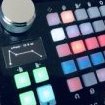
Yes.It's well hidden, but it's there. I did a bunch of shots to visualize the process... Select Block Bypass you want to change color--->Press PageLeft+PageRight--->Bypass assign--->Page Right--->Customize--->Page Right--->Switch Led (rotary)
-
I'm sure you know it already, but here you can find real counterparts (and sometimes even original manuals) of Helix amp/cabs. https://helixhelp.com/models
-
Don't know that specific pedalboard brand on the video, but if you like that kind of style, just check the Ruach Kashmir pedalboards. (they also have side holes to add routing accessories as DC in and IN/OUT)
-
Wild speculation...could be they did it that way because the helix tuner does require some processing for both audio analysis and pixel rendering/animation, so they couldn't offer full working tuning at the same time of a full audio pipeline rendering. I just keep a mini korg pitchblack just before the helix, out of a volume pedal (the tuner out), works great and it can stay ON all the time. Clip is also fine, just be sure you don't have a nitro finish on your headstock. :)
-
Harmonizer, as for any other pitch tracking/detection algo, it's sensible to signal quality, strength and clarity. If you are 100% sure your guitar tone is clean (and I mean, no fret buzz, clean playing, clean phrasing, no clipping, in tune etc..) then I'd try placing some compressor before the harmonizer, and of course, harmonizer before any other effect and amp/cab. IME, if the input is clean and my playing style is clean, these effects are working pretty good and in a predictable way.
-
I use a lot these kind of effects. I do have a plus pedal, a freeze, and also the one in the Helix. The longer the sample, the worse the effect, as more samples means more amplitude variations, hence more audible and ugly patterns. So, IME, the secret here is to learn how to use these pedals. The best technique, for me, is to exaggerate a bit the attack strenght, and then engage the effect just after the attack of a note/chord. This way you grab the portion with lot of harmonics and note separation, but without the attack clipping (which again is cause of audible pulsing) and without losing any note. It's kind of lag you need to use, between all your playing attacks, and the freeze effect. Once you learn the flow, you will get some solid and cool drones.
-
The real question is; do we really need all this mess to do a EVH tone? (gif of Homer Simpson hiding in the bushes....)
-
I doubt we'll ever see these modules in the Helix, as it would mean rethinking a lot of stuff. Said that, my best move ever with the Helix, was to add a Zoia as a companion, to do all that CV control stuff (LFO, comparators, slew limiters, etc etc), linked to Helix effect params via MIDI. It's now like Helix with a brain. So would have been great, but it wont happen. :)
-
?? I was replying to the guy getting different volume from multi and xlr. :)
-
Dumb question; is the main volume knob assigned to control all outputs or just XLR?
-
I have seen sooooo many neck shaving going wrong around forums (even done by luthiers) that I do really suggest to leave them alone.
-
I do prefer to put my Iridium, and all the other pedals, in the FX Send/Return of my HXStomp (which I use without HX amp/cab simulation). Everything set at Instrument level (both iridium and FX loop). This way I move the iridium where I want in my HX preset chain, through the use of a FX loop block. Since Iridium is stereo, you could even send and return full TRS. As for the noise, hard to tell, but be sure to match all levels (instrument VS line), and also be sure that Iridium is set to simulate both Amp and Cab (it's in the manual). Give it a try, works great, and you shouldnt get any feedback loop. (forget all the pedals in the middle)
-
I just do te easy way, that works fine for me most of the time. All prestes done at "solid" volume and then a generic "loudness" profile in the Global EQ to be engaged at low volumes. Easily adjustable on the fly as needed. It's harder the opposite way, as you tend to over-compensate everything when doing presets at low volume. This is one of those aspects that people tends to overthink about, especially guitarists. :)
-
Zero chances.
-
CCs 4, 5 6 and 7 are not reserved. I use them regurarly. Be sure you have activated the MIDI IN in each block bypass page.
-
Rockboard angled flat. I did some crazy tight routing with these, and they works just great.
-
As Phil said, you need the two version matching, and yes, you need to manually import your own presets. There is no magic sync.
-
Send it back and wait for a new unit. If you contact L6, in the middle of holidays, I've the fear you'll be waiting for days without a solution, risking to miss the return window. Just send it back ASAP, it's clear something is wrong on that unit.
-
These are standards. You just need to know how to use them in their best field of application. Q Factor it's acting on narrow bandwidths (stock 0.7 is ~2 octaves), especially at very high Qs. That's why it is mostly used for fine tuning EQ, like introducing notches, for click/noise removal, harmonics removal etc... You can't do all this stuff with a bare band/octave EQ, without overlapping frequencies you shouldn't touch. Q factor is also very useful for "on the fly" room correction, since you can quickly act on the "offender" without change color to your overall sound. And I guess that's why they used this for the Global EQ. Then, you just go with one band per octave EQ for a standard overall equalization (curve shaping).
-
I don't think L6 is using a different Quality factor (Q), that would be a nonsense from a technically standpoint. Math is easy peasy; Q=f0/BW(f2-f1)@-3dB, where BW is the Bandwidth (delta between f1 and f2) and f1, f2 are the lower and upper Cutoff Frequencies (let's see them as the width of the f0, at -3dB from the peak) Bandwidth, BW(f2-f1)=(f0/Q) So, for example, using your numbers, at f0=440Hz with Q=1 we'd have (at -3dB from the peak) =~272Hz =~712Hz Unless you are thresholding that -3dB from it's natural point, you should get pretty much the same numbers and curves in any EQ. EDIT: About that 0.7 that Helix use as default, well, there are not right or wrong numbers. We can only assume they had a reason to do that... like for example to avoid overlapping. Who knows...
-
Also check settings in the Gloabals in/out-------->Headphones Monitor Try the various settings. I remember something similar when using Multi instead the exact output I wanted to hear.
-
I have the Stomp since pandemic started...so it's almost a year and an half. Did several live videos with it, dozens of rehearsals in the hot summer as well in the cold...other than normal daily use at home, at least couple of hours per day. Well, I have no idea what bugs you all are talking about.... I must have a prototype made by unicorns.